Adjusting GTO (Game Theory Optimal) ranges for low-stakes poker involves understanding the typical player tendencies at those stakes and exploiting them effectively.
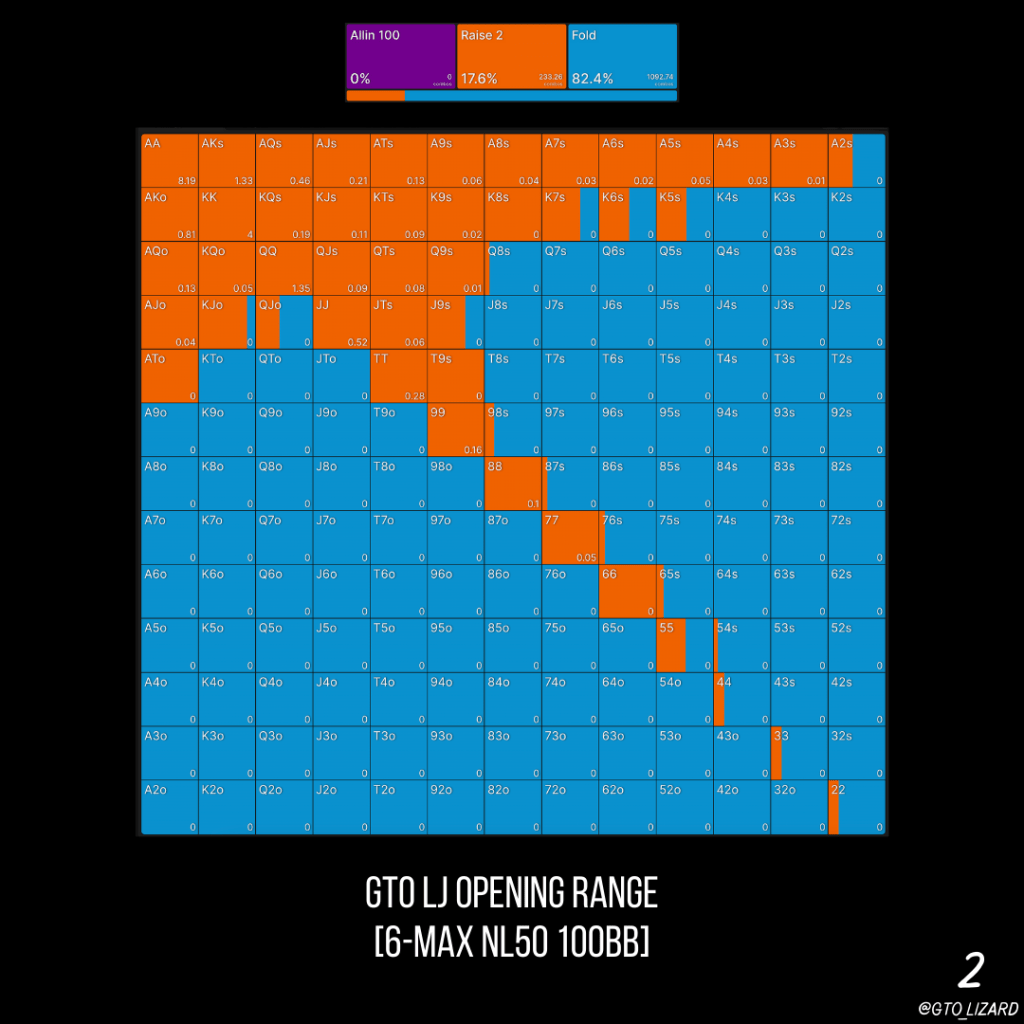
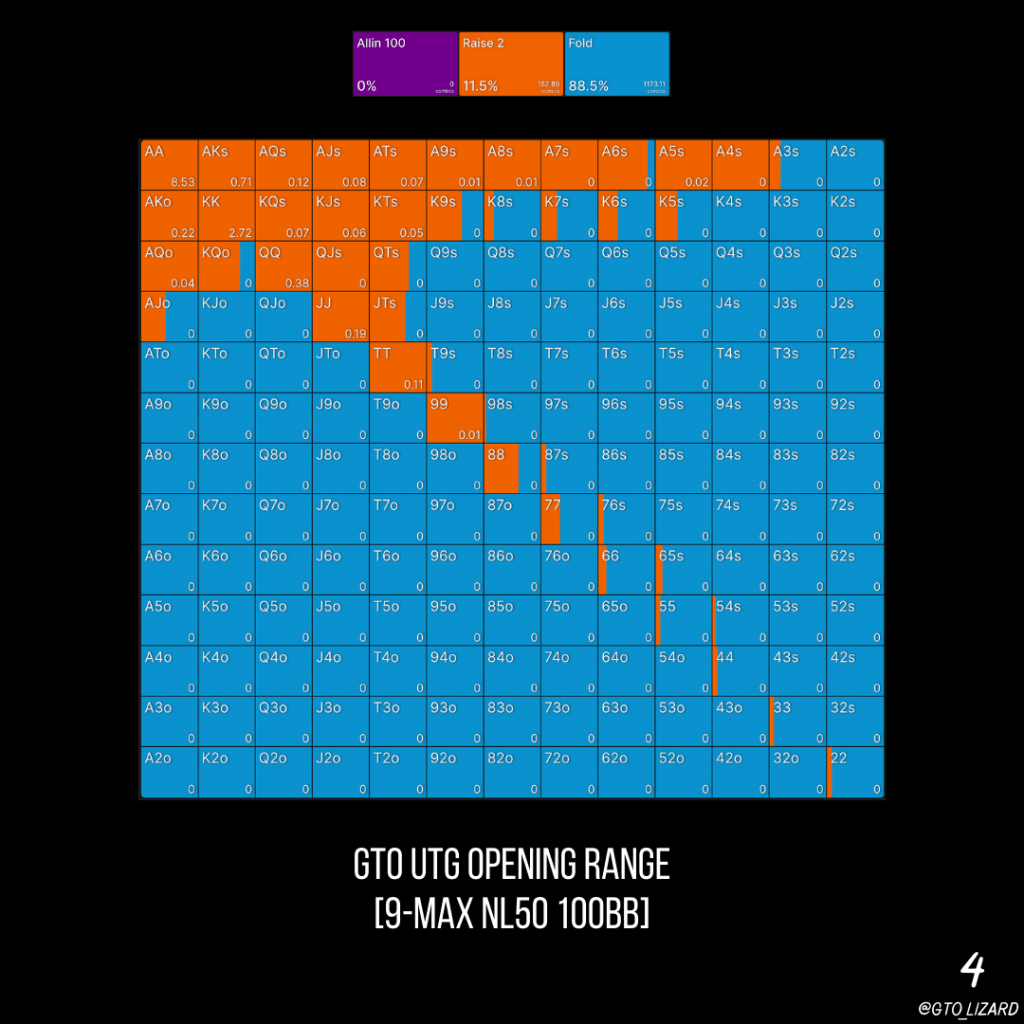
GTO shows us a decent starting point but we can certainly improve on this for live poker as playing GTO in these games is just too defensive and too cautious. We would leave a lot of money on the table if we always stuck to GTO!
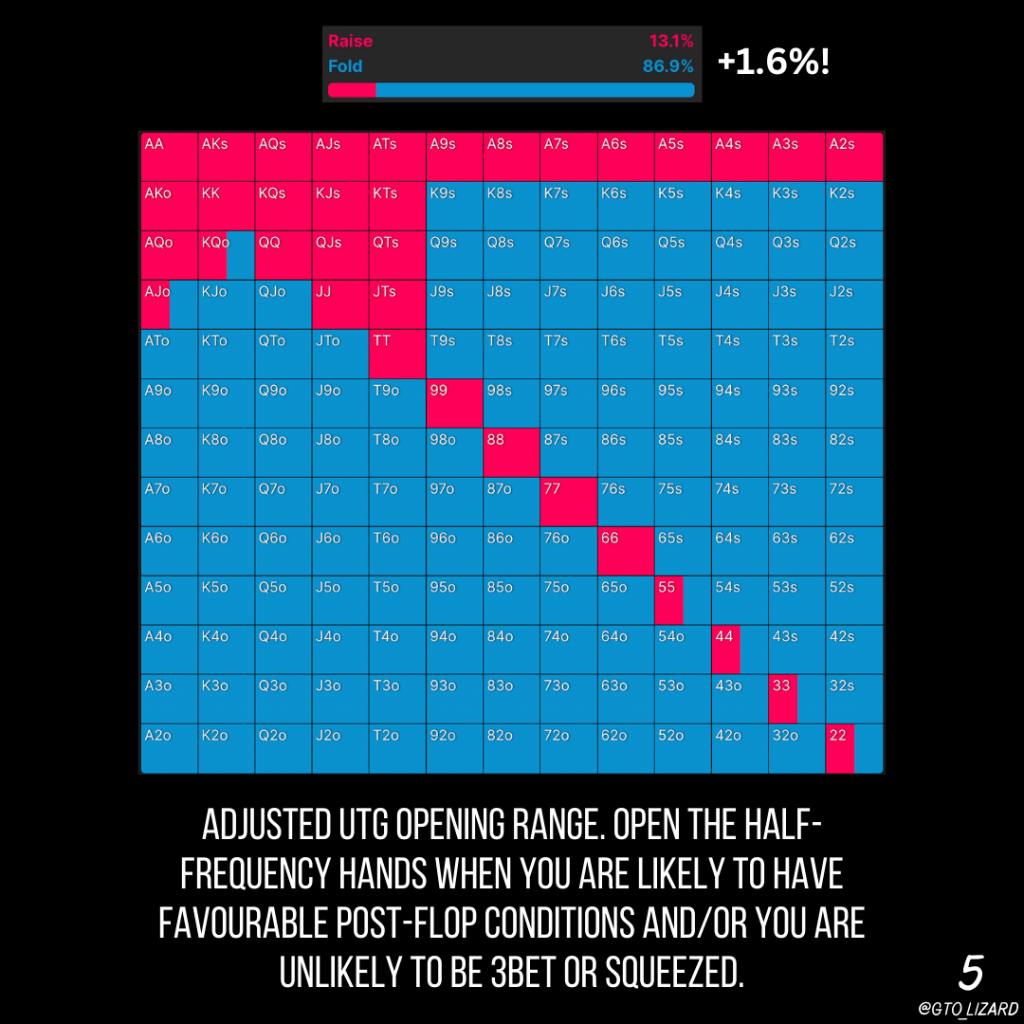
After getting a certain amount of experience in live poker you will start to get a feel for how likely certain post-flop scenarios will occur. For example, let’s say you are UTG in a 9-handed game and you look down at KQo:
In scenario (a) the blinds are both very weak players and there are no aggressive 3bettors at the table – this would be a favourable open. We are likely to see a flop heads-up in position against a weaker opponent playing too wide of a range (good news for our offsuit broadways!).
In scenario (b) the blinds are very competent as are the CO and BTN who will 3bet light – so this would now not be a profitable open. We are unlikely to end up playing a heads-up single-raised pot in position on this table and we will get 3bet and squeezed at a much higher frequency than in the first scenario.
In scenario (c) the table is extremely loose and flops are typically 4 or 5 way but KQo does not play well in multiway pots and so this would not be a profitable open either. Don’t fall into the trap of simply playing wider ranges when the whole table is loose, instead play the hands that can cooler people in multiway pots like pocket pairs and suited aces.
When the positions get later feel free to open up your ranges more to take advantage of the pre-flop and post-flop passivity of your opponents but when you start a hand out of position you are starting off the battle with one hand tied behind your back.
#gtolizard #ironlobster #gtowizard #pokerstrategy #openingranges #livepoker #londonpoker #preflop #prefloppoker #multiwaypots


 Crush Cash Poker